Archive for October, 2008
Many college students don’t gain the dreaded freshman 15 their first year away from home, but they do pack on 6 to 9 pounds, two studies show.
Why? Key reasons include dramatic increases in beer drinking and significant decreases in physical activity.
The latest studies were conducted at Indiana University in Bloomington and Tufts University in Boston.
Indiana researchers surveyed 272 female students and 149 men on the campus about their weight and living habits. The findings, presented at the meeting of the Obesity Society this month in Phoenix:
- 60% of students said they gained weight from the beginning of their freshman year to the beginning of their sophomore year. The women said they put on 7½ pounds; men, almost 9.
- 67% of the women gained weight from the beginning of their freshman year to the beginning of the senior year, putting on an average of 10 pounds; 86% of men gained an average of 14 pounds during that time.
- 76% of female students and 33% of males say they eat when under stress.
Read more at USA Today
With more and more people becoming more concerned about fitness, more and more people are now signing up at the local gym to be able to become fit and stay fit.
Although there are a number of highly-experienced trainers in the gym to assist you in your workout program, injuries still happen. Here are a few essential gym safety tips to remember while working out.
Get a Fitness Evaluation
Gym safety begins with knowing your limitations. Before you begin your workout, make sure that your trainer would first let you undergo a fitness evaluation. If they do not do this on your first day at the gym, demand to be given one.
Through the fitness evaluation, your personal trainer would not only be aware of your fitness level, it would also make sure that your trainer is aware of any medical conditions you may have such as previous injuries, high blood pressure and heart conditions.
As such, your personal trainer would be able to create a workout program that would ensure your safety while allowing you to achieve your goals, be it losing weight or bulking up.
You do not need Rock Hard Abs or Bulging Muscles to be fit. And you don’t need a personal exercise trainer or live your life around exercising.
People do need to reset their minds into getting in shape in a smart sensible way…unless they choose to live at a GYM.
If you look around your house you will see many ways to stay fit if you just put a little effort into everyday things. Run if usually walk. Walk if you usually drive.
Staying fit has to be a goal. You have to change the way you think and how you act. If you want to stay fit it has to be a real personal goal.
You have to be serious about getting fit. You cannot just say that you are going to get fit and then start losing weight.
Getting in shape takes real commitment. If you are serious about getting in shape and staying fit then you need to make a plan.
Losing weight isn’t easy. It has taken you years to build up the fat; it will take a few months to get it off. You actually should be glad you can’t just drop 50 pounds. If you lose weight too fast then you will actually make permanent stretch marks.
The common belief of many men who are trying to get those sexy six-pack abs and stronger looking physique is to eat larger servings of high-protein foods (and a number of different supplements to boost).
It is true that as you workout in the gym more and more, you would need protein rich foods which have been considered as muscle building foods to get the body you want.
But you do not have to stuff your face with so much food and supplements to complement your workout training regimen.
In fact, consuming large food servings during different times of the day may even slow down your progress because the more food you consume, the more you would need to exert effort to burn these all out.
Aside from that, many muscle building food supplements have been known to contain some steroids which could cause health problems in the future.
There are a number of muscle building foods that you can easily get from the local grocery or eat in restaurants which would are extremely delicious, satisfying, give you the needed amount of protein your body needs to bulk up yet low in fat. Here are just some examples of these delicious muscle building foods.
It could not be stressed enough as to just how good exercise is for you.
Medical professionals have continuously advocated the many health benefits of regular exercise.
Some of the benefits that have been repeatedly mentioned are that it helps speed up your metabolism to help you lose weight, builds up muscles, increases your stamina and endurance and it is good for your bones.
Yes, that’s right! Regular exercise using weights and machines that give some form of resistance helps the body promote the growth of bones. This improves your bone density level and as a result helps you fight osteoporosis.
There are some exercises that have been considered as ideal exercises for strong bone development and maintenance. Here are some of them.
Yoga and Pilates
While this is considered as a low impact exercise routine, yoga has been classified as one of the ideal exercises for strong bone development. This is because instead of using weight machines to put some resistance, yoga and pilates use your entire body weight for this.
WIM, bike, run, rake leaves. Climb monkey bars if you’re a child, do water aerobics if you’re older. Do whatever you like. Just keep moving.
That, in essence, is the message of the physical activity guidelines announced this month by the federal Department of Health and Human Services.
The basic recommendations — including the core guideline that Americans should get about 150 minutes of moderately intense activity per week — have not really changed from the ones announced in 1996 by the surgeon general’s office.
What is different is the emphasis on the variety of activities — including daily chores — that can reap the profound health benefits of exercise.
There is no “one size fits all.” Instead, the guidelines are broken into specific recommendations for adults, children, people over 65 and others.
And while sustained aerobic activities are the foundation, there are other types of activities — muscle-building and flexibility-enhancing — that are also important.
Here are some ideas on filling your own exercise prescription.
Read more at The New York Times
We have all heard the saying “No pain, no gain.” Oftentimes, people who work out in the gym would apply this saying to explain when they experience body pains while exercising.
While feeling sore after a workout can be common because you tend to exert your muscles, not all body pains while exercising should be ignored.
In fact, there are some pains that should turn on an alarm signal in your head if you experience these body pains while exercising.
This is because these pains may signal an injury or something worse. Here are just some of the body pains that should never be ignored while you are exercising.
Chest Pains
Perhaps the number one body pain while exercising that must never be ignored is chest pains. While your chest may feel a bit sore after doing some exercises targeting your pectoral muscles, do not take this lightly.
Chest pains that are accompanied by a difficulty in breathing may be that your heart is beating a little bit way too fast than what is accepted, causing it to be overworked.
Obesity is rampant. The devastating cocktail of fast food and sedentary lifestyle has made the western world look like a visit to the Hutt palace.
But this article isn’t about junk food. You know you shouldn’t crumble a bag of Oreos over your breakfast nachos.
These are six seemingly innocent things that fly under the radar, and crash land right on your ass.
6. Your Caffeine Addiction:
“Addiction” might be a tad dramatic seeing as how there isn’t actually any hard evidence that caffeine is addictive, but we’re willing to stake our reputation as Internet doctors that pretty much everybody reading this has had a liquid stimulant today.
There are casual and hard-core caffeine users, but both can find themselves getting fatter by the day.
The casual drinkers disguise their stimulant in layers of crushed ice and whipped cream. This gets to be a problem when drinks like Starbucks’ famous Frappuccino have around 500 calories per cup.
Even worse, the human brain has a logical disconnect when it comes to liquid calories. That is to say, it doesn’t acknowledge them at all.
Read more at Cracked
Plan your summer fitness program to beat the effects of extremely hot weather.
To build a healthy body, mind and spirit, you need a regular exercise routine to reap all of its benefits, which are literally endless.
Although the hot weather in summer can make following a fitness exercise routine difficult, try not to use it as an excuse.
Try to fit in at least 30 to 60 minutes of physical activities or fitness exercises every day in the summer to maintain or increase an existing fitness level.
Fitness workouts to maintain fitness in the summer:
To beat the heat and humid weather and maintain summer fitness, you need to follow a fitness exercise routine with appropriate actions. Here are a few fitness exercises that keep you fit and build your arms in the summertime.
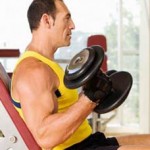
Reverse curls: Start the exercise by standing with your feet shoulder-width apart. Then, hold dumbbells in both hands (one for each), drop the arms before you and palms towards in. Now, slowly lift the dumbbells up with elbows near to the rib cage. Hold for a few seconds, lower the dumbbells, and return to your original position.
Regular aerobic exercise can not only stave off the decline in brain function that often comes with age, it can also help turn back the clock on brain aging, two experts in the field report, based on a critical review of published studies.
Age-related deterioration in the all-important white and gray matter in the brain makes a number of high-level “executive function” tasks — such as planning, scheduling, working memory and multi-tasking — much more difficult, Drs. Arthur F. Kramer and Kirk I. Erickson explain in the latest issue of the British Journal of Sports Medicine.
Yet a substantial body of research shows that these are the very processes that are most responsive to physical exercise, note the authors from the University of Illinois Beckman Institute, Urbana.
In people with or those without signs of dementia or Alzheimer’s disease, regular moderate physical activity, enough to make a person breathless, has been shown to boost not only the speed and sharpness of thought but also the actual volume of brain tissue and the way in which the brain functions, Kramer and Erickson note.
Recent Posts
- 5 Exercise Machines To Add To Your Home Gym
- 6 Ways Of Getting Ripped Abs
- 5 Techniques To Make Your Body Beach Weather Ready
- Postnatal Fitness: A Workout For New Moms
- 5 Ways Nutrition Works To Build Muscles
- Exercise Helps Overweight Children Reduce Anger Expression
- 5 Ways To Alleviate Boredom At The Gym
- A Fitness Regime For Fall
- 5 Knockout Indoor Cycling Tips
- Exercise: The Brain’s Fountain Of Youth